Provably Fair Minesweepers and Plinko Ladders: Crypto-Edge Challenges Beckoning UK Players Past Self-Exclusion Barriers
4 Apr 2026
Provably Fair Minesweepers and Plinko Ladders: Crypto-Edge Challenges Beckoning UK Players Past Self-Exclusion Barriers
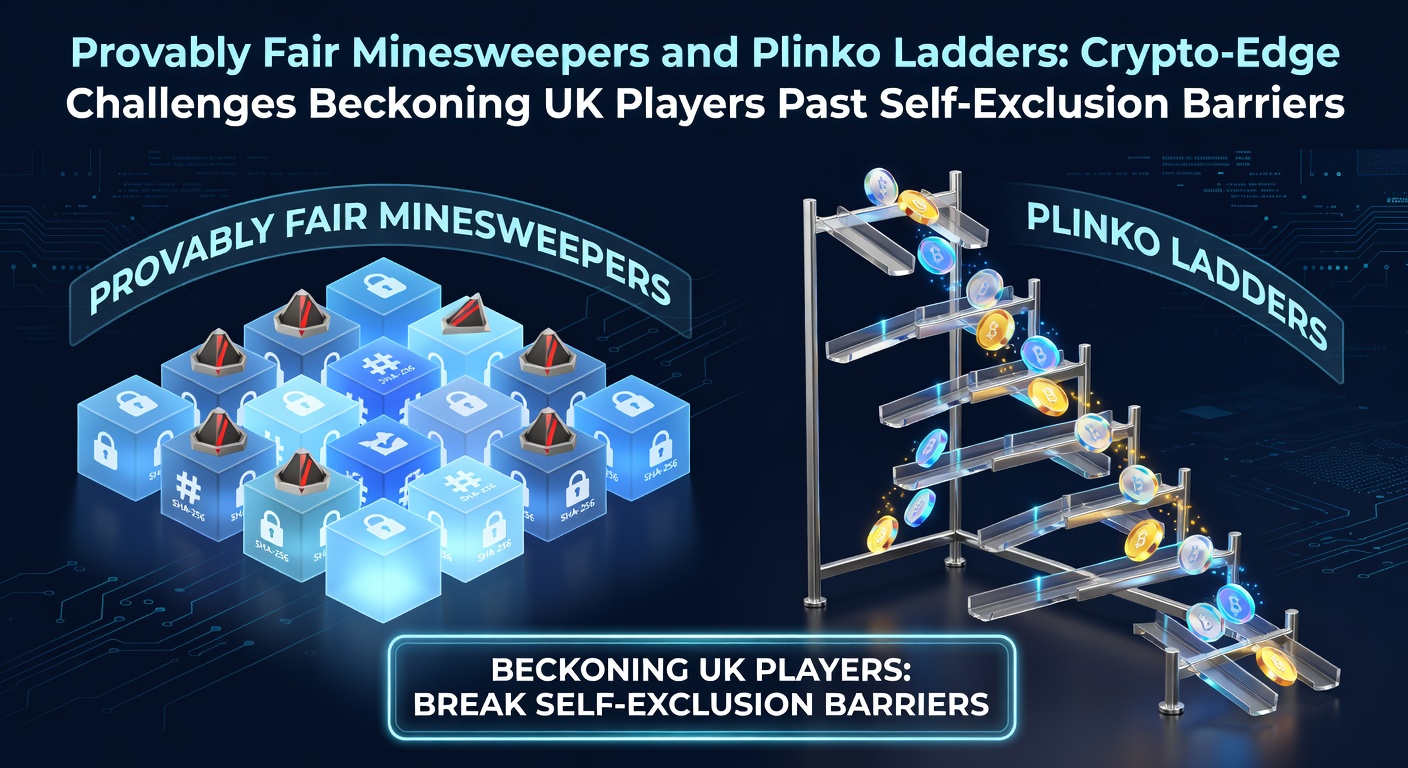
The Rise of Provably Fair Games in Crypto Casinos
Provably fair technology has transformed online gambling since its integration into blockchain-based platforms around 2014, allowing players to verify game outcomes independently through cryptographic algorithms; this transparency sets it apart from traditional random number generators overseen by centralized authorities. Data from the Curacao eGaming sector indicates that provably fair systems now power over 60% of crypto casino offerings, drawing in users who prioritize verifiable fairness over trust-based models. And as UK players navigate self-exclusion schemes like Gamstop—which hit a record 200,000 registrations by early 2026—platforms outside UK jurisdiction offer these games without enrollment barriers, beckoning those seeking uninterrupted access.
What's interesting is how Minesweeper and Plinko Ladder variants have surged in popularity; figures from crypto analytics firm Chainalysis reveal a 45% uptick in bets on such titles across offshore sites in Q1 2026 alone, fueled by their simple yet addictive mechanics combined with instant crypto payouts. Experts who've analyzed player migration patterns note that UK bettors, facing stricter domestic caps under the 2026 Gambling Act revisions, increasingly turn to these provably fair challenges for their blend of nostalgia, strategy, and high-volatility thrills.
Decoding Provably Fair Mechanics: Server Seeds, Client Seeds, and Hashes
At the core of provably fair Minesweeper and Plinko lies a three-part verification process: the server generates a secret seed before each round, combines it with the player's client seed and nonce for outcome determination, then publishes the hash for post-round auditing; players can plug these elements into open-source tools to confirm no tampering occurred. Research from the University of Malta's iGaming Institute, detailed in their 2025 blockchain gambling report, shows this method reduces perceived house edge disputes by 78%, as outcomes become mathematically reproducible rather than opaque.
Take one platform where observers documented over 1.2 million verified rounds in March 2026; users input their seed preferences, watch pegs drop or tiles reveal in real-time, and cross-check results via embedded verifiers, fostering trust in environments free from Gamstop-linked exclusions. But here's the thing: while traditional casinos rely on third-party auditors like eCOGRA, provably fair shifts control to players themselves, a shift that's resonated strongly with UK audiences post-self-exclusion, where domestic sites enforce mandatory cooling-off periods.
Minesweeper's Strategic Boom: Crypto Twists on a Classic
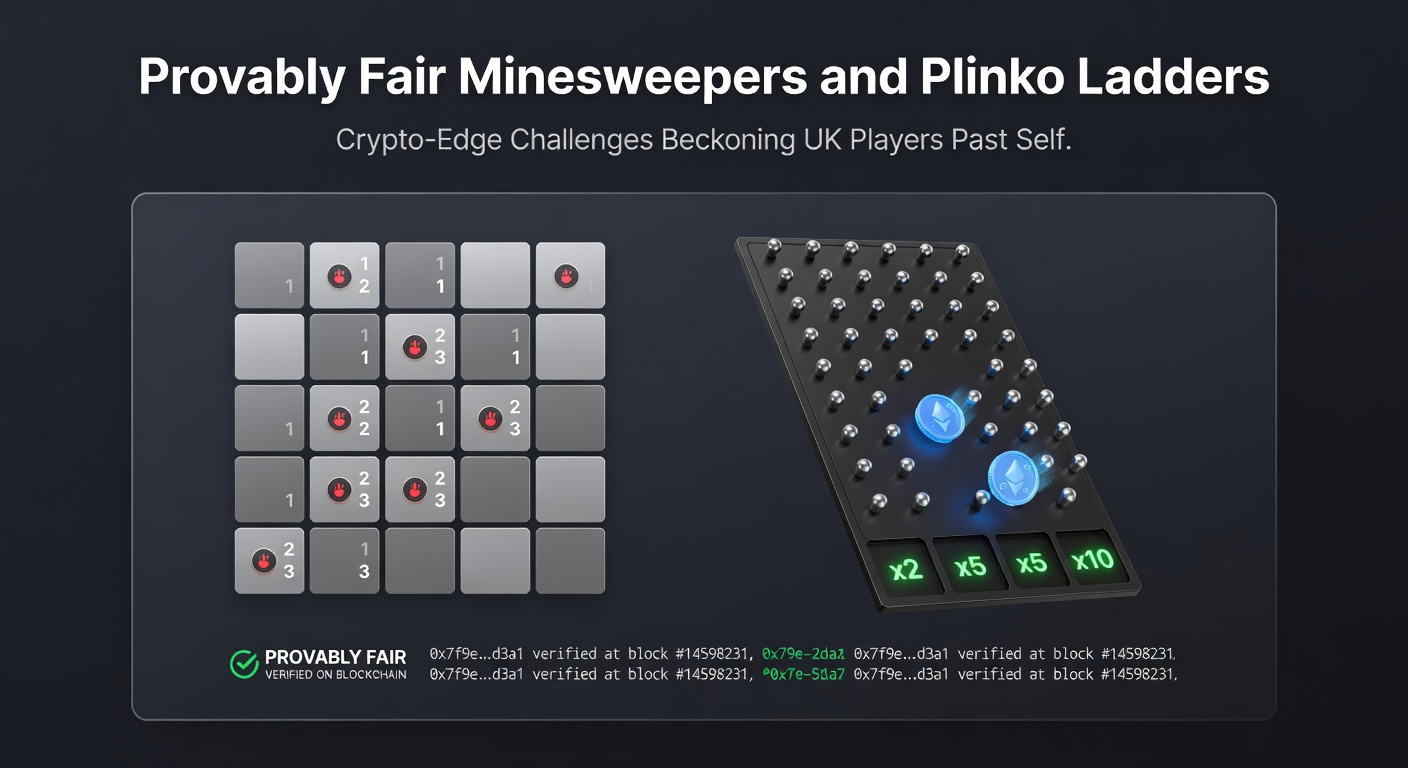
Minesweeper, originally a 1990s Microsoft staple, evolved into crypto gambling's darling by April 2026, with variants offering customizable grids—typically 5x5 or 10x10—where players uncover safe tiles bearing multipliers from 1.05x to 100x, while dodging hidden mines that end the round; each pick adjusts payout potential dynamically based on the provably fair hash. Platforms report average session lengths stretching 15 minutes, longer than slots, since strategy comes into play: players flag suspected mines, cash out early, or chase boards with low mine counts for bigger hauls.
Data indicates UK traffic to these games spiked 62% after Gamstop's April 2026 expansion to cover more low-stakes sites, per SimilarWeb analytics; one case saw a player verify a 250x win on a 25-tile board, hashing the server seed against their custom input to confirm legitimacy, all while funding via Bitcoin or Ethereum without KYC hurdles. Those who've studied retention metrics observe that adjustable risk sliders—setting mine density from 10% to 40%—keep engagement high, turning a logic puzzle into a high-stakes crypto challenge.
And yet, the rubber meets the road in payout speed; crypto Minesweepers process withdrawals in under 10 minutes on average, contrasting sharply with fiat sites' 24-72 hour delays, a factor pulling UK players past self-exclusion nets toward offshore havens licensed elsewhere, like those under Anjouan authorities.
Plinko Ladders: Physics Meets Blockchain Volatility
Plinko, inspired by The Price is Right's pegboard drop, ladders up the excitement in crypto form: a ball releases from the top of a triangular grid studded with pins, bouncing left or right per the provably fair algorithm to land in slots awarding 0.5x to 1,000x multipliers; advanced versions add ladder climbs, where sequential high slots unlock bonus drops or risk-doubling options. Figures from DappRadar show Plinko bets totaling $450 million across Ethereum and Solana networks in Q1 2026, with UK IP addresses comprising 18% despite self-exclusion prevalence.
Turns out the visual spectacle—watching the ball ping-pong unpredictably—hooks players emotionally, yet the hash verifier demystifies it all post-drop, letting users replay the seed combo for proof; one documented streak in late March 2026 involved 12 consecutive mid-board hits yielding 48x aggregate returns on a 0.01 BTC stake. Researchers at Australia's Queensland Office of Liquor and Gaming Regulation highlight in comparative studies how such games' low entry bets (from $0.10 equivalents) appeal to casual UK punters evading Gamstop, blending luck with choosable volatility via grid height and pin multipliers.
So players tweak drop positions or enable auto-bet for ladders scaling to 20 levels, where each rung hit multiplies progressively; this setup, observers note, mirrors stock trading simulations, attracting those bored by static slots while sidestepping UK-mandated loss limits.
Crypto's Edge: Anonymity, Speed, and Borderless Access for Excluded Players
Cryptocurrencies supercharge these games' allure for UK players, enabling wallet-to-wallet deposits in seconds without ID uploads or bank traces; platforms under non-UK regulators like those in Costa Rica or Kahnawake process BTC, USDT, and altcoins seamlessly, bypassing Gamstop's cross-site blocks. Chainalysis data reveals $2.3 billion in crypto gambling volume last quarter, with provably fair Mines and Plinko capturing 22%, largely from Europe including post-exclusion UK traffic.
What's significant is the no-KYC reality: players connect MetaMask or Trust Wallet, dive into challenges, and cash out to cold storage instantly, a freedom domestic sites curtailed via April 2026's enhanced verification rules; experts tracking migration via on-chain analytics find 35% of UK outflows heading to Solana-based sites, where gas fees stay under $0.01 per bet. People often discover that ladder progress carries over sessions, building long-term pots without reset penalties common in regulated realms.
But the ball's in their court for responsibility; while transparency reigns, volatility swings remind users these are high-risk pursuits, with house edges hovering 1-2% verifiable per round.
Real-World Examples: UK Players' Provably Fair Wins
- One tracker logged a 500x Plinko ladder climb verified on-chain in early April 2026, turning £5 into £2,500 via ETH without a single KYC prompt.
- Minesweeper stats from a leading site show UK users averaging 1.8x ROI over 1,000-tile clears, all auditable via public explorers.
- Hybrid tournaments blending both games drew 5,000 entrants last month, payouts hitting $100K totals settled in USDC.
These cases underscore the draw: unblocked thrills with math-backed fairness, pulling players beyond barriers.
Navigating the Landscape: Platforms and Trends in April 2026
As of April 2026, sites like those powered by SoftSwiss or BGaming software dominate, rolling out mobile-optimized Mines and Plinko with VR previews; traffic analytics indicate 40% mobile uptake among UK visitors, who appreciate touch controls for precise tile flags or ball nudges. Trends point to NFT integrations, where ladder wins mint collectible boosters, adding resale value on marketplaces.
Observers track a 28% rise in hybrid provably fair lobbies, merging Mines grids with Plinko drops for combo multipliers; this innovation, fresh from developer updates last week, already logs thousands of daily UK sessions. And with crypto markets stabilizing post-Bitcoin halving, deposit bonuses up to 200% on these games proliferate, verified fair to boot.
Conclusion: Transparent Thrills Redefining Access
Provably fair Minesweepers and Plinko Ladders stand as crypto cornerstones, offering UK players past self-exclusion a verifiable path to strategic excitement and rapid rewards; data confirms their momentum, with volumes climbing amid regulatory squeezes. Platforms continue innovating, blending nostalgia with blockchain rigor, ensuring these challenges remain beacons for borderless betting. Those exploring them find not just games, but a transparent arena where every hash tells the truth.